Your practice has outgrown a system that was never built for psychiatry
Purpose-built for SPRAVATO®, TMS, and ketamine. Osmind replaces the patchwork of tools multi-provider practices duct-tape together with one system for charting, scheduling, compliance, and collections – all backed by the largest interventional network in the country.
.webp)
Trusted by 1000+ Practices
What’s quietly hurting your practice’s growth?

Revenue Your Biller Left Behind
Your biller collects a fraction of what’s owed and lets the rest age out, while you pay staff to chase what billers abandoned.
.webp)
Buy & Bill You Keep Putting Off
You’d offer Spravato buy & bill if you weren't afraid of fronting drug costs and not knowing you’ll be reimbursed.
.webp)
Compliance Held Together by Memory
REMS and interventional documentation live in free-text boxes, one audit away from clawbacks.
.webp)
Growth You Can’t Act On
You’re ready to add a provider, a location, or a new modality, but your infrastructure can’t carry it.
.webp)
Patients Feel the Friction
Slow prior auths, no record access, and dropped follow-ups damage every patient's experience and they stop coming/drop out of treatment
One platform built for psychiatry.
Not six that weren’t.
The more Spravato and TMS you run, the more scrutiny you draw. Osmind makes compliance the default, not a task someone has to remember:
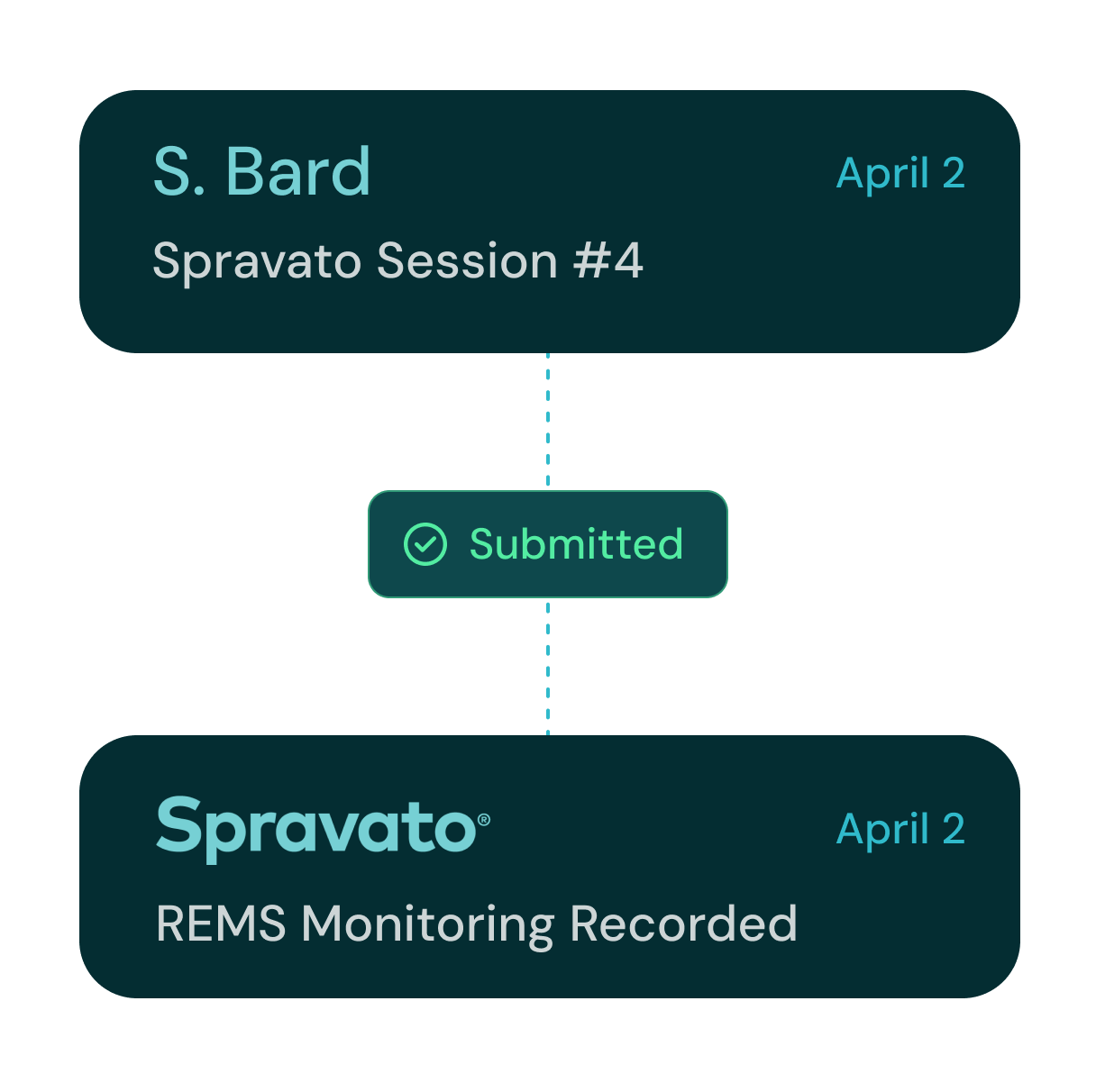
REMS monitoring form populated from chart note and submitted automatically, not buried in manual processes.
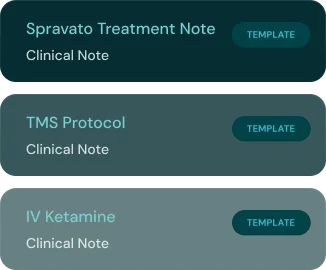
Templates that guide compliant charting (medical necessity, the details payers audit for) as your clinicians work.
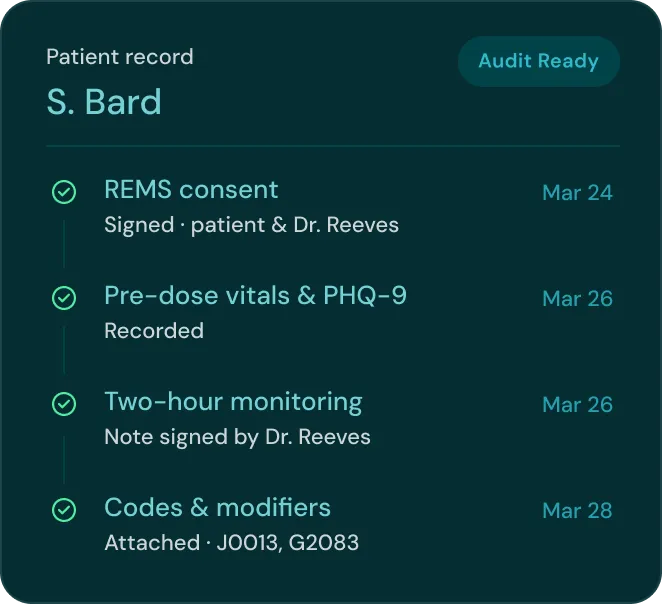
A complete record that holds up if a payer or board comes calling.
treatments delivered
outcomes measured
practices nationwide
network of independent psychiatry practices
Know today’s revenue against payroll before the month closes
Most interventional practices can't forecast a day's revenue because their reporting was never built for it. Osmind shows you:

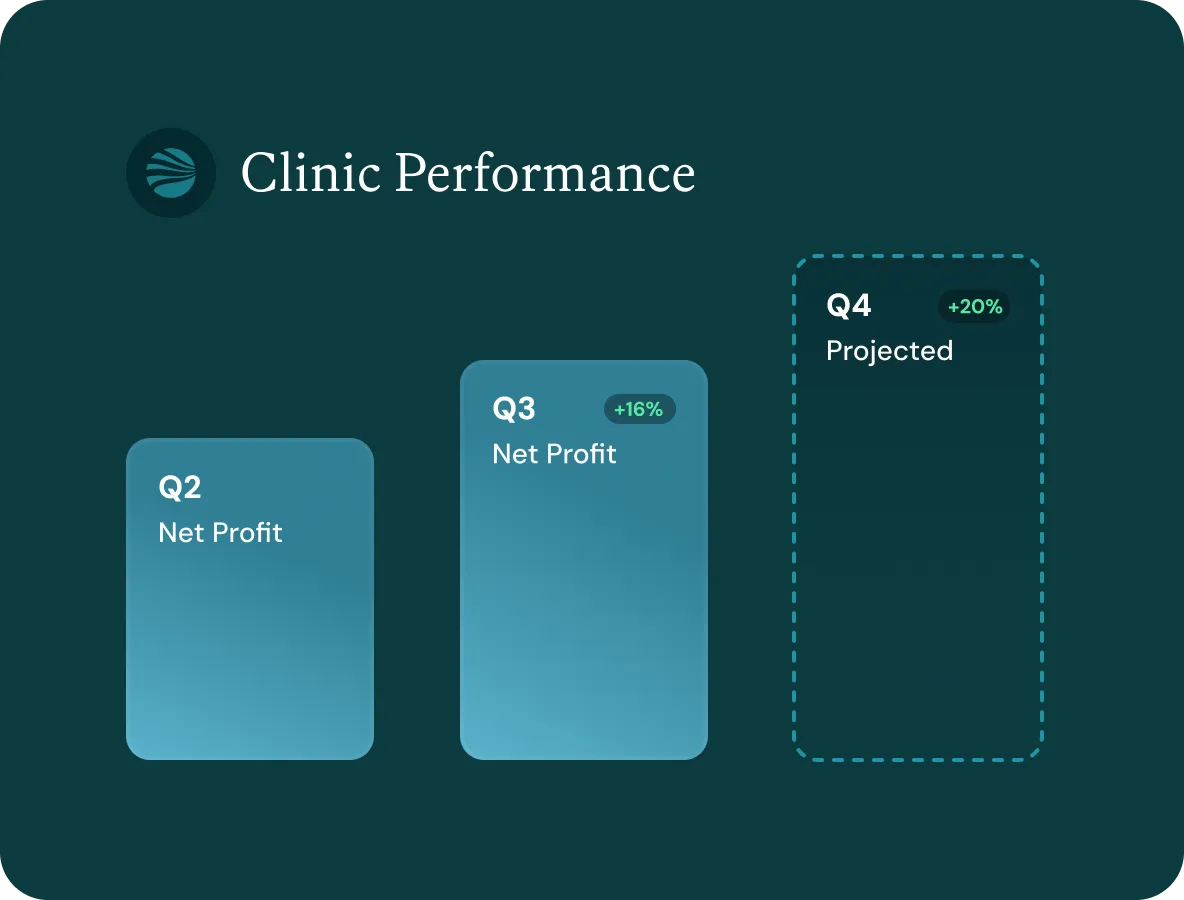
Expected reimbursement against your fee schedule, by treatment and provider.
What's driving (or draining) margin across service lines.
The metrics you need to decide when to add a chair, a provider, or a location.
Every provider, every site,
one standard of care
Scaling from one location to several breaks the tools you started on. Osmind is built for multi-provider, multi-site interventional practices:
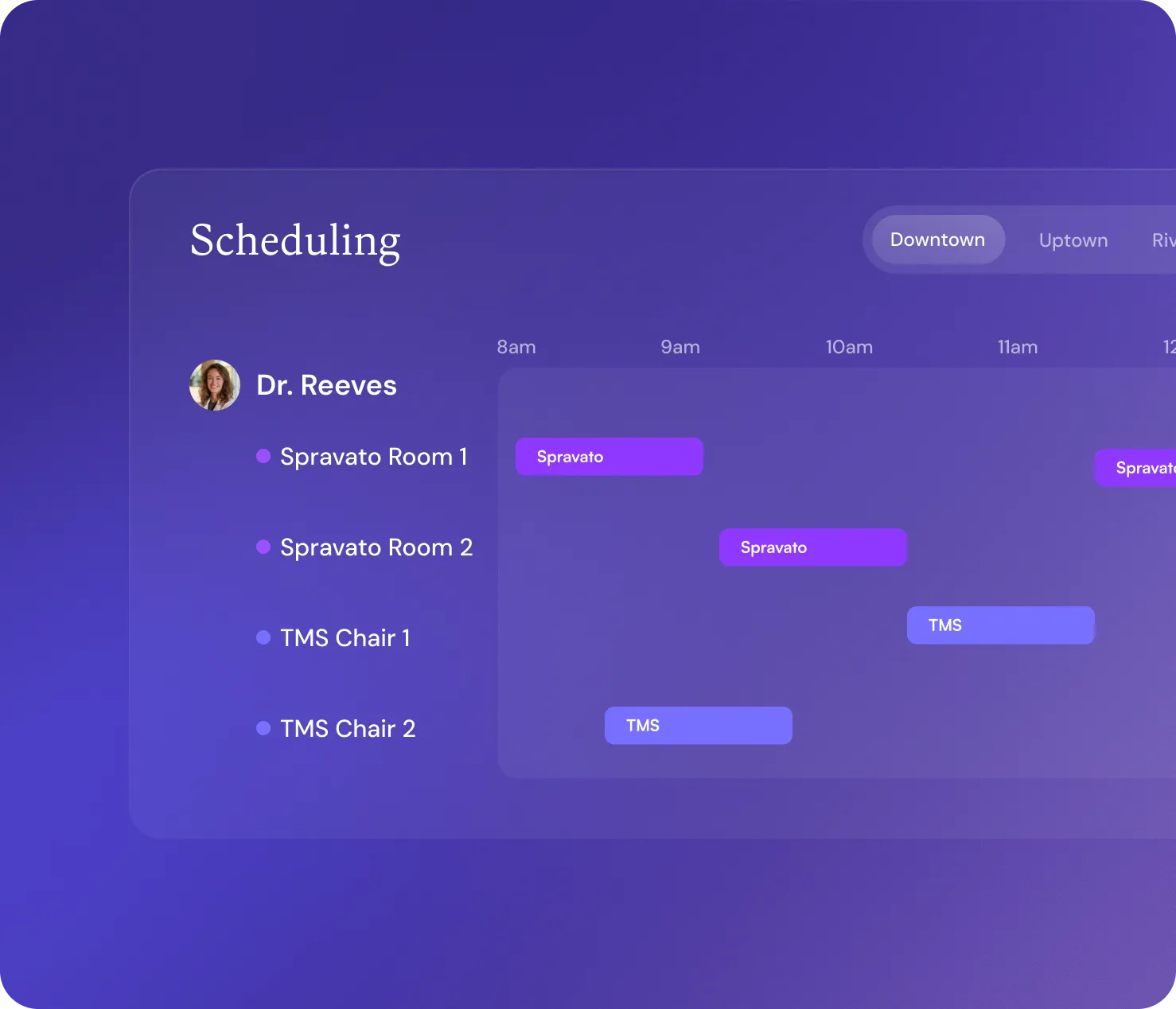
Multi-location scheduling with bookable non-human resources. Reserve a Spravato room or TMS chair like any other slot. No more scheduling pains - just an EHR that solves the headache of multi-site interventional practices.
Intake auto-populates the chart; REMS consent and PHQ-9 reminders fire automatically. Stay protected and confident with built-in compliance.
.webp)
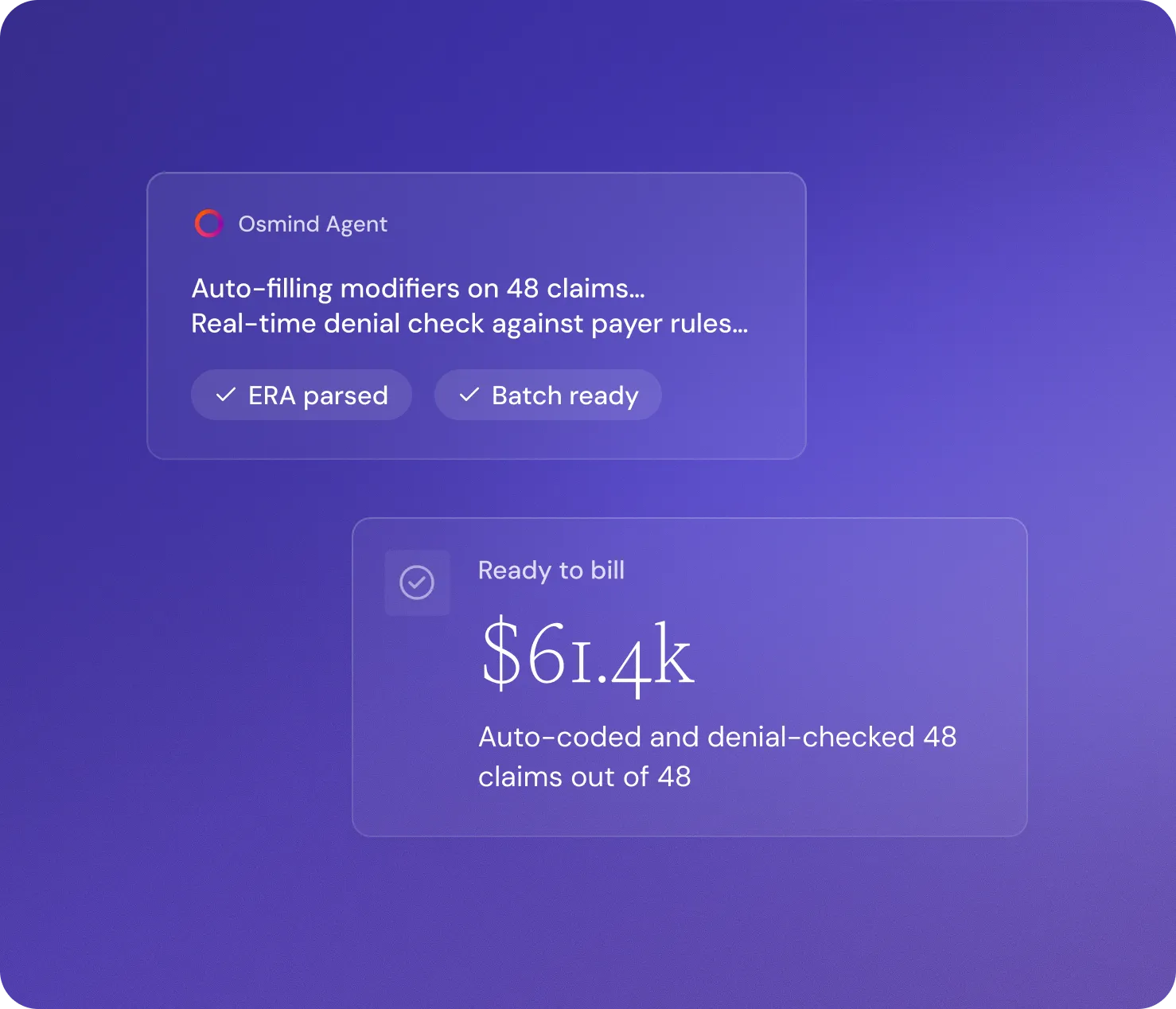
Modifier auto-fill, detailed ERA data, batch claims, and real-time denial checking - all built on the largest Spravato and TMS billing dataset in the US. Works whether your team bills or we do.

Keep patients in care and engaged between visits
Measurement-based care with rating scales that graph outcomes automatically.
A patient app for records, messaging, and follow-ups that reduce drop-off.
Faster prior auths so treatment starts before a patient loses momentum.

Timely prior auths and full benefit verification before you administer, so you know what you'll collect before you're out of pocket.
.webp)
Templates guide compliant charting as clinicians work, minimizing denials, audits, and clawbacks.
.webp)
Save on drug costs, contracts, and the collective intelligence of 1000+ practices and the most Spravato and TMS volume in the U.S.
Two ways interventional psychiatry practices scale with Osmind
.webp)
Trade up to better rates.
Join the network to access shared payer contracts negotiated across 800+ practices, plus the same dedicated billing support.
.webp)
Your back office, handled
Platform + a dedicated partner who handles RCM, credentialing, and reporting, so you can focus on scaling the practice, not managing vendors. Your contracts, your brand, your autonomy.
Mostly therapy and med management, or not yet at volume for full-service billing?
Start with the software on its own merits, and upgrade when you’re ready.
.webp)
Switch without missing a payment or a patient
We’ve transitioned practices off EHRs and 6+ tool stacks.
We tell you the real friction up front: switching clearinghouses adds about 2-4 weeks of EDI re-enrollment.
We manage it all for you, so you can keep seeing patients and getting paid.
.webp)
"We deliberated on this decision for a long time, but ultimately concluded that partnering with Osmind was essential to our ability to take action on a long-held plan to expand our interventional services... robust operational support built around a tailored EHR and targeted billing strategies, including better credentialing and billing support than we received from billers not focused on the interventional space, templates that guide compliant documentation, support with denials, and an EHR with strong integrations."
Todd Young, MD
CEO, Paxina Health
.webp)
"There were so many things that we loved about Osmind. But when we found out they were getting the new billing integration and we could do that, that's what really hooked me. For ease of practice, that's one of the biggest things with burnout, I think: the documentation, all the different messaging, the prescription refills, the billing. It was very important to me to have a smooth-flowing system."
Cassi Heuer
PMHNP, Elevate Wellness and Psychiatry
.webp)
"The implementation has been incredibly seamless from my end. The information tailored to my practice was handled in such an organized way through excel sheets. I have not felt overwhelmed once during this process. The team has been helpful and very quick to respond to questions. I usually feel anxious when I'm about to start with a new EMR, but this time I'm relieved."
Nicole Motakef
D.O., MBLDN
See the platform built for your psychiatry practice, not adapted to it.
For twenty years, interventional psychiatry ran on borrowed software. That era is ending. The practices ready before the next modality is approved (COMP360, Midomafetamine) will move first.
Frequently asked questions about Osmind
If you have any additional questions, speak to the Osmind team.
Do you support Medicare/Medicaid billing?

Yes, on Osmind One and Osmind 360, Medicare and Medicaid billing is fully supported. Claims are submitted under your practice's own Medicare/Medicaid contracts, not Osmind's.
How long does it take to switch EHRs to Osmind?
Most mid-market practices move to the Osmind platform without disrupting active patient care, with a structured onboarding team managing the transition end-to-end.
Unlike generic EHR migrations, Osmind's team has done this specifically for interventional psychiatry practices, so scheduling, REMS documentation, and billing data transfer are handled by people who already know the workflow, not a generalist implementation team learning psychiatry on the fly.
Will switching EHRs disrupt my practice's revenue while it's happening?
No. Osmind's onboarding is designed to keep claims moving and appointments on schedule during the transition, which is the specific failure mode practices are trying to avoid after a prior bad migration.
What happens to my historical patient and billing data when I move to Osmind?
Patient records, billing history, and outstanding claims are migrated as part of onboarding, so nothing outstanding falls through the cracks in the transition. This directly counters the AR-bleed fear: practices worry that switching means writing off AR in flight, not just relearning a new interface.
What's the difference between Osmind One and Osmind 360, and which one fits my practice?
Osmind One is the software platform for practices with a strong in-house billing team who want to keep that function themselves.
Osmind 360 adds fully outsourced billing and revenue cycle management for practices that don't have the admin bench to run it in-house.
As a rule of thumb: if you're actively hiring an in-house biller, Osmind One is likely the fit; if you're paying a third-party billing company and still not collecting what you're owed, Osmind 360 is worth a conversation.
Does Osmind support Spravato REMS compliance directly in the EHR?
Yes. Osmind is the only major EHR with native REMS compliance workflows built in for Spravato (esketamine), so practices don't need a separate system or manual tracking to stay compliant. This matters most to practices currently forcing REMS documentation into an EHR (like a general-purpose platform) that wasn't built for it.
Why would I pay Osmind and still pay staff to do billing?
You shouldn't have to, and that's the exact problem Osmind 360 is built to remove. Practices on a generic EHR frequently pay a billing vendor's fee and then hire in-house staff to chase the accounts receivable that vendor won't touch past a certain age, effectively paying twice for one job. Osmind 360 combines the software and the billing service so there's one accountable partner, not two.
My practice is adding a new service line (e.g., Spravato or TMS). Does Osmind help with that transition specifically?
Yes. Osmind supports practices adding interventional modalities with built-in compliance workflows, buy-and-bill support, and access to collective purchasing discounts on drugs like Spravato, all designed for practices scaling a new service line, not just running an existing one. This is a distinct use case from switching EHRs outright, and worth its own answer since it's a common trigger event.
Does partnering with Osmind help with payer contracts and credentialing?
Yes. Osmind practices gain access to collective bargaining power on payer rates and credentialing that an independent practice can't get alone, while still keeping the ability to hold their own payer contracts if they prefer. This directly answers the "zero negotiating power" pain independent practices face against larger groups, without implying they lose control of their own contracts.
How does Osmind 360 pricing work?
Osmind 360 uses a performance-based model. Osmind earns a share of what it collects on your behalf, meaning the incentive is aligned to your revenue, not seat licenses. Practices don't pay for services that don't produce collections, which is the direct answer to "what's the catch" before it's asked.
Do I lose ownership or control of my practice if I partner with Osmind?
No. Practices that partner with Osmind keep 100% ownership, complete clinical autonomy, and their own practice name and brand. Osmind's model is "practice independently, together": you gain collective bargaining power on payer rates and drug purchasing without giving up control of how you run your practice.
Can Osmind support a practice with multiple locations or one that's about to add a second location?
Yes. Osmind's platform and services are built to support multi-location practices as a single source of truth for clinical, billing, and scheduling data across sites, rather than treating each location as a separate system. This is worth its own answer because a new-office move is one of the most common triggers practices cite right before they outgrow a generic EHR.
Is my data secure and portable?
Yes. We use enterprise-grade security and comply with all HIPAA requirements. You retain full ownership of your patient data. If you ever leave, your data comes with you.
Do you provide training for my staff?
Osmind 360 and Osmind Care Network includes comprehensive live training for your team, ongoing support, and a dedicated account manager. Osmind One includes self-service resources and basic support.
If you, or someone you know, is in crisis or needs immediate assistance, please call 911 immediately. To talk to someone now, please call the National Suicide Prevention Lifeline at 1-800-273-8255 or 988.
Osmind © 2026 All Rights Reserved.